How can I maintain a US address as a US citizen living abroad?


Living abroad offers freedom, flexibility, and new opportunities, but it also creates practical challenges. One of the most important is maintaining a reliable U.S. address.
Many Americans discover that even after leaving the country, banks, government agencies, employers, and other institutions still expect them to maintain a U.S. address. Without one, managing finances, receiving important documents, and maintaining compliance can become significantly more difficult.
The good news is that several options are available. The right choice depends on what you need your address to accomplish.
TLDR:
You have several options:
Using a friend or family member’s address is cost-effective but may burden them with managing your mail.
Virtual mailbox services offer convenience and flexibility, providing a US address where your mail is received, scanned, and uploaded for online access. However, these services can be costly and are not suitable for every legal and financial purpose.
Domicile services, such as those offered by SavvyNomad, provide mail handling, legal assistance, CPA support, and compliance monitoring. Domicile services can help you establish and document legal residency in tax-friendly states, supporting long-term stability and continuity for legal and financial matters; actual residency and tax treatment always depend on how states and agencies apply their rules to your situation.
Why a U.S. address still matters
Many Americans assume that once they move abroad, they no longer need a U.S. address. In reality, a U.S. address often remains important long after relocation.
Financial and banking access
Banks, credit card companies, brokerage firms, and other financial institutions frequently require a U.S. address on file.
A valid U.S. address can help with:
- Maintaining existing bank accounts
- Receiving replacement debit and credit cards
- Managing investment accounts
- Completing identity-verification requests
- Opening certain new financial accounts
Many institutions have compliance requirements that make address information an important part of account management.
Government and compliance requirements
Government agencies often continue sending important documents after you move abroad.
Examples include:
- IRS correspondence
- Tax notices
- Voter registration information
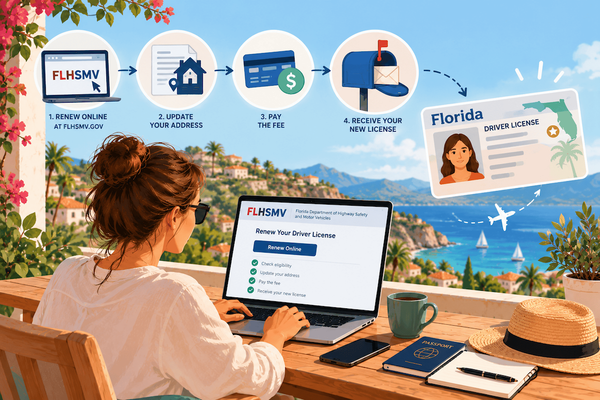
- Driver's license renewals
- Vehicle registration documents
- Social Security correspondence
Having a reliable U.S. address helps ensure these documents reach you promptly.
Everyday administration
Even routine tasks often require a U.S. mailing address.
You may need one for:
- Receiving packages
- Managing subscriptions
- Business correspondence
- Insurance documents
- Professional memberships
A consistent address helps simplify many aspects of life abroad.
What happens if you don't maintain a U.S. address?
Some Americans attempt to rely entirely on foreign addresses after relocating overseas.
While this may work in certain situations, it can create challenges.
You may encounter:
- Requests for address verification from financial institutions
- Delays in receiving tax notices
- Difficulties renewing licenses
- Problems receiving replacement cards
- Complications when opening new accounts
The exact impact depends on your circumstances, but many expats find that maintaining a U.S. address creates significantly fewer administrative problems.
Not all U.S. addresses are the same
One of the most common misconceptions among expats is that all U.S. addresses work the same way.
They do not.
Some addresses are designed primarily for receiving mail. Others can support broader residency and documentation needs.
This distinction matters because banks, insurance companies, DMVs, and government agencies may evaluate address types differently.
An address that works perfectly for receiving mail may not be accepted for every financial or administrative purpose.
Understanding these differences can help you choose the right solution from the beginning.
Option 1: Use a friend or family member's address
Some Americans use the address of a trusted friend or family member.
This is often the simplest and least expensive option.
Benefits
The primary advantage is cost. Most friends and family members are willing to help without charging fees.
It also provides a real residential address that may be familiar to institutions already connected to your records.
Limitations
This arrangement creates responsibilities for the person handling your mail.
They may need to:
- Sort mail
- Forward packages
- Scan documents
- Respond to urgent requests
Privacy can also become a concern when sensitive financial or legal documents are involved.
For short-term travel, this option may work well. For long-term international living, many people eventually look for a more structured solution.

Option 2: Use a virtual mailbox service
Virtual mailbox services have become increasingly popular among expats, digital nomads, and frequent travelers.
These services provide a mailing address where your mail is received, scanned, and uploaded to an online portal.
You can review mail from anywhere in the world.
Benefits
Virtual mailbox services offer significant convenience.
Most services allow you to:
- View scanned mail online
- Request forwarding when needed
- Receive packages
- Manage mail remotely
This flexibility makes them attractive for highly mobile lifestyles.
Limitations
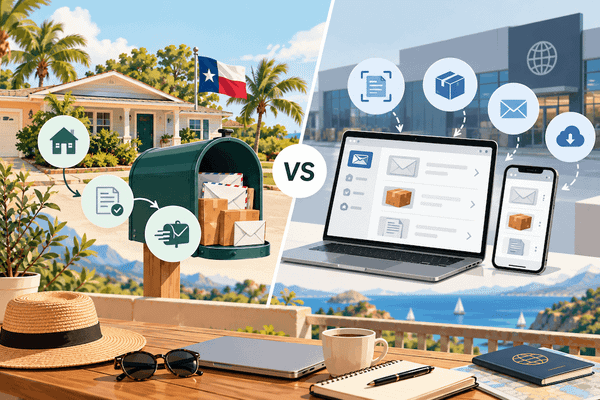
Virtual mailbox services primarily solve a mail problem.
They do not necessarily solve residency, domicile, banking, licensing, or compliance challenges.
Some virtual mailbox providers operate through Commercial Mail Receiving Agency (CMRA) addresses. These addresses are perfectly legal for receiving mail but may not always be treated the same way as residential addresses by certain institutions.
If your goal is simply managing mail, a virtual mailbox may be sufficient. If you need broader residency support, additional solutions may be necessary.
Option 3: Use a domicile and residential address service
Some Americans living abroad need more than mail forwarding.
They may need a stable legal home state that supports banking, licensing, vehicle registration, voting, and other administrative functions.
This is where domicile services can be helpful.
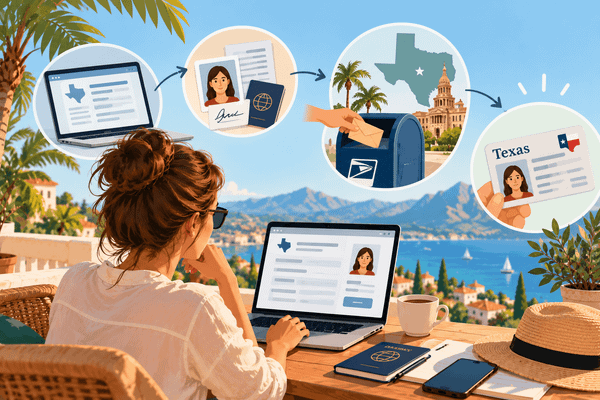
Domicile services help support the documentation and address infrastructure needed to establish and maintain domicile in a state, subject to the requirements of that state and individual agencies.
These services are particularly common among:
- Expats
- Digital nomads
- Retirees living abroad
- Full-time travelers
- RVers
Benefits
A domicile solution can provide a more comprehensive approach than a traditional virtual mailbox.
Depending on the provider, services may include:
- Residential address support
- Mail forwarding
- Digital mail access
- Residency documentation assistance
- Vehicle-registration support
- Access to professional guidance
For people building a long-term life abroad, these services often provide additional stability.
Why many expats choose Florida
Florida has become one of the most popular domicile states for Americans living abroad.
Several factors contribute to its popularity.
Florida offers:
- No personal state income tax
- Well-established domicile procedures
- Strong banking compatibility
- Vehicle-registration options
- Driver's licensing infrastructure
- Residential address solutions
- Mail-forwarding services designed for mobile lifestyles
For many expats, retirees, and digital nomads, Florida provides a practical foundation for maintaining a long-term U.S. presence while living overseas.
Which option is right for you?
The best solution depends on your goals.
If you simply need someone to receive mail occasionally, a friend or family member's address may be enough.
If you need convenient mail management from anywhere in the world, a virtual mailbox can provide significant flexibility.
If you need support for domicile, licensing, banking, residency records, and long-term life abroad, a residential address and domicile solution may be a better fit.
The key is matching the address type to your actual needs rather than assuming one solution works for every situation.
How SavvyNomad can help
SavvyNomad helps Americans living abroad maintain a consistent U.S. presence through domicile support, residential address solutions, and mail management services.
Services include:
- Residential address solutions
- Mail forwarding
- Digital mail access
- Florida domicile support
- Vehicle-registration assistance
- Access to CPA guidance
- Compliance monitoring tools
The goal is to help expats, retirees, and remote workers keep their residency, banking, licensing, and documentation records aligned while living overseas.
Conclusion
Maintaining a U.S. address while living abroad is often about much more than receiving mail.
Your address can affect banking, taxes, licensing, voting, insurance, and many other aspects of daily life.
The right solution depends on your needs. Some people only need a mailing address. Others need a more comprehensive residency and domicile strategy.
Understanding the difference can help you choose a setup that supports both your current lifestyle and your long-term plans abroad.