Can you keep your Florida homestead exemption while living abroad?
Living abroad does not automatically eliminate your Florida homestead exemption. Learn how domicile, residency, rentals, and property use affect eligibility.

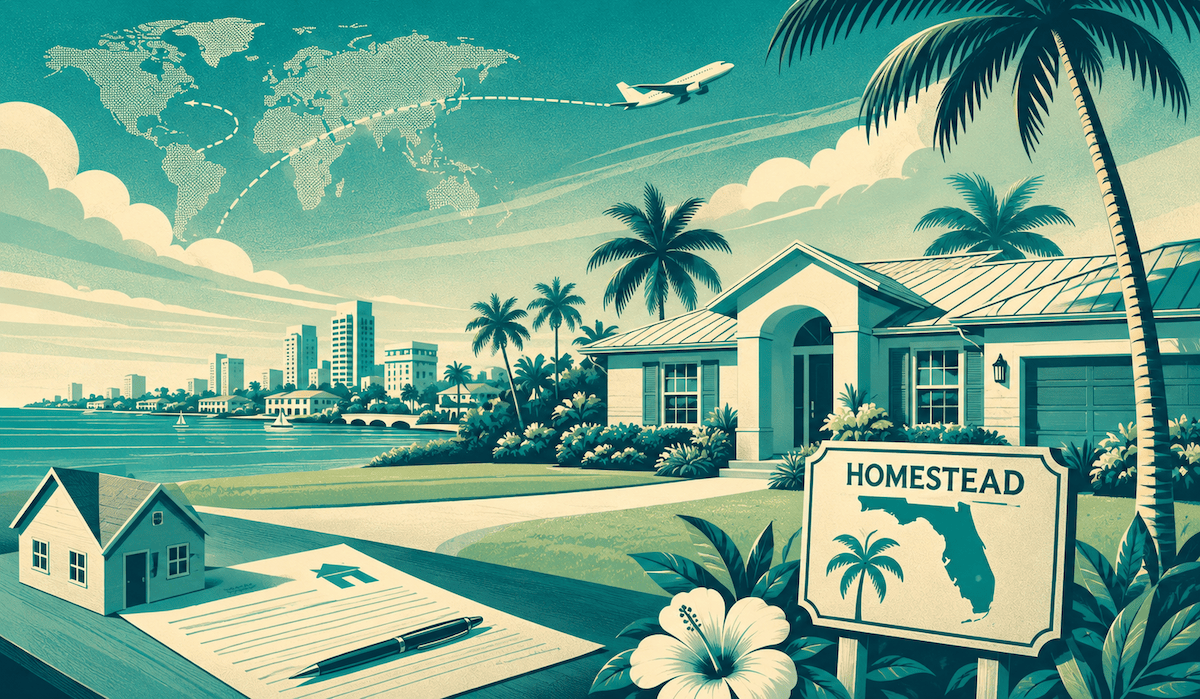
Many Americans who move abroad continue to own a home in Florida, whether they are retirees, expats, or digital nomads.
A common question we get is whether a person can maintain their Florida homestead exemption while living outside the United States.
The answer depends on a few things, especially whether you still consider your Florida property your permanent home. Florida law does not require you to live in the state when you apply for or keep the homestead exemption. Still, some actions you take while abroad could put your exemption at risk.
Keep reading to find out how these rules apply to Florida homeowners living abroad and what you can do to protect your homestead exemption.
Yes, you may be able to keep your Florida homestead exemption while living abroad, but it depends on whether the property continues to qualify as your permanent residence. Living overseas does not automatically eliminate homestead eligibility, but actions such as establishing residency elsewhere, claiming another homestead benefit, or converting the property into a long-term rental can put the exemption at risk.
Florida property appraisers look at your overall residency profile, including your domicile, driver's license, voter registration, vehicle registration, and other records. The more consistently these records indicate that Florida is your permanent home, the stronger your position becomes.
Because homestead status can provide valuable property tax savings and legal protections, expats should understand the rules before making major changes to residency or property use.
Quick answer: Can you keep your Florida homestead exemption while living abroad?
Sometimes.
Living abroad does not mean you automatically lose your Florida homestead benefits. Many people spend a lot of time outside Florida and still qualify.
The main thing is whether your Florida property is still your permanent home and if your actions show that Florida is your long-term base.
Property appraisers consider many factors.
Your entire body of facts and records with respect to your Florida licenses and registrations, etc., far outweigh any attempts on your part to establish ties in any other state in an attempt to claim such another state as your residence.
Other activities, such as declaring another state as your residence, claiming another homestead exemption or converting your primary residence into a long-term rental, would also present significant problems.
What is the Florida homestead exemption?
Florida's homestead exemption is a property tax benefit available to qualifying Florida residents who use their property as their permanent residence.
The exemption can reduce the taxable value of a home, thereby lowering annual property tax obligations.
In addition to tax savings, homestead status often provides access to Florida's Save Our Homes protections. These rules limit how quickly the assessed value of a homesteaded property can increase for tax purposes.
Florida homestead status also provides certain legal protections, including creditor protections and special treatment in some probate situations.
Because of these benefits, keeping your homestead eligibility can be very valuable in the long run.
If you own your property for a long time, losing homestead status can mean much higher property taxes.
Related: Florida residency guide
Florida domicile vs Florida homestead
One of the most important concepts to understand is that domicile and homestead are related but not identical.
Your domicile is your permanent legal home. It is the state where you maintain your primary legal ties and intend to return indefinitely.
Homestead, on the other hand, focuses specifically on whether a property qualifies as your permanent residence for Florida property-tax purposes.
Someone can maintain a Florida domicile without necessarily qualifying for a homestead exemption.
For example, an expat may keep Florida as their legal domicile while living abroad, but no longer meets the requirements for homestead treatment on a particular property.
Likewise, someone can own property in Florida without making it their domicile.
Knowing the difference explains why just having Florida as your domicile does not automatically mean you qualify for the homestead exemption.
What Florida looks at when determining homestead eligibility
Florida does not rely on a single document to determine whether a property qualifies for homestead treatment.
Instead, local property appraisers look at several factors to see if your property is really your permanent home.
These factors may include:
- Driver's license records
- Voter registration
- Vehicle registration
- Mailing addresses
- Banking records
- Insurance records
- Tax filings
- Overall residency patterns
No single factor usually decides the outcome by itself.
For example, just keeping a Florida driver's license might not be enough if all your other records point somewhere else. On the other hand, spending time abroad does not always mean you lose homestead status if most of your records still show Florida as your main home.
Being consistent is more important than any single document.
Living abroad temporarily vs permanently
Temporary absence
Many people leave Florida temporarily without losing homestead eligibility.
Examples include:
- Extended international travel
- Overseas work assignments
- Long-term caregiving responsibilities
- Seasonal stays abroad
- Digital nomad lifestyles
In these cases, the main question is whether your Florida property is still your permanent home, even while you are away for a while.
If most of your records still point to Florida and you plan to return, you may still be able to keep your homestead status.
Permanent relocation
Permanent relocation creates a different situation.
If you set up a new main home somewhere else and show you plan to stay there, it becomes harder to keep your Florida homestead.
This can occur when someone:
- Establishes domicile in another state
- Claims another state's homestead exemption
- Purchases a new primary residence elsewhere
- Moves permanently to another country with no intention of returning
The more proof there is that Florida is not your main home anymore, the higher the risk of losing your homestead eligibility.
Can you rent out your Florida homestead while abroad?
Rental activity is one of the most common areas where problems arise.
Many homeowners think they can always rent out a homesteaded property while living abroad. In reality, renting it out can affect your eligibility, depending on the situation.
Long-term rental arrangements often receive greater scrutiny because they may indicate that the property is no longer the owner's primary residence.
Short-term rentals can also cause problems, depending on how long they last and local rules.
Property appraisers often check whether your rental activity aligns with the idea that your property is still your permanent home.
Since rules vary by county, homeowners should check local requirements before turning a homesteaded property into a rental while living abroad.
Common situations for expats
Living abroad while keeping Florida as your domicile
This is one of the most common scenarios.
Many expats maintain Florida domicile while spending most of their time overseas. They continue using Florida addresses, licenses, vehicle registrations, banking relationships, and other records.
In some cases, this arrangement may support continued homestead eligibility.
How strong your case is depends mostly on whether Florida is still truly your permanent home.
Retiring overseas
Retirees often face additional considerations.
Some retirees spend most of the year abroad but maintain a Florida home that they continue treating as their primary residence.
Others gradually shift their center of life overseas and eventually establish stronger ties outside Florida.
The distinction can significantly affect homestead eligibility.
Digital nomads and full-time travelers
Digital nomads often have unique challenges because they may spend little time in any one location.
The more you move around, the more important it is to keep your documents consistent.
If your address, licenses, registrations, and financial records all show Florida, it helps prove that Florida is still your permanent home.
Common mistakes that can trigger problems
One of the biggest mistakes is thinking your homestead status will last forever without any action.
Another common issue is claiming residency benefits in another state while continuing to claim a Florida homestead.
For example, obtaining another state's homestead exemption can create immediate conflicts because most states expect these benefits to apply only to a primary residence.
Using different addresses in different systems can also cause problems. If your banking, licenses, insurance, and tax documents all list different addresses, it weakens your Florida case.
Changing your voter registration, registering vehicles in another state, or building stronger legal ties outside Florida can cause similar problems.
Renting out your property is another common issue. If your home starts to look more like an investment than a place you live, it can be harder to keep your homestead exemption.
What happens if Florida removes your homestead exemption?
Losing your homestead status can cost you a lot.
The most immediate consequence is usually higher property taxes.
You may also lose Save Our Homes protections, which can significantly increase future assessments.
In some cases, the county might assess back taxes, penalties, or interest if it decides you should not have kept the exemption.
The exact consequences vary depending on circumstances and local determinations.
That is why it is better to plan ahead rather than wait for problems to arise later.
How to strengthen your Florida position while abroad
If you want to keep Florida as your permanent home while living abroad, being consistent is very important.
The strongest situations typically involve:
- Maintaining Florida domicile
- Using Florida addresses consistently
- Keeping Florida driver's licenses
- Maintaining Florida voter registration
- Keeping Florida vehicle registrations
- Aligning banking and insurance records
- Documenting an ongoing intention to return
The more your records and details show Florida as your home, the stronger your case usually is.
Related:
- How to select the state of domicile
- Florida residency for couples
- Florida vehicle registration while living abroad
How SavvyNomad can help
Keeping a Florida residency profile while living abroad takes more than just owning a home there.
Your address, domicile, licenses, vehicle registration, banking records, and other documents all need to match up.
SavvyNomad helps expats, retirees, and digital nomads maintain Florida domicile through:
- Residential address solutions
- Mail forwarding
- Florida residency support
- Record-alignment guidance across major systems
Having a strong domicile setup can help you avoid paperwork problems while living abroad.
Your Florida homestead exemption is easier to keep when the rest of your residency details back it up.
Conclusion
Living abroad does not mean you automatically lose your Florida homestead exemption.
The main question is whether Florida is still your permanent home, and if your actions show that.
Property appraisers usually look at your whole situation, not just one document or your travel plans.
For expats, retirees, and digital nomads, maintaining consistent ties in Florida often becomes the most important factor. The more your domicile, addresses, registrations, and financial records align with Florida, the stronger your position may be.
Since homestead benefits can be worth a lot, it is important to understand the rules before making big changes to your residency.
FAQs
Can I keep my Florida homestead exemption if I move overseas?
Maybe. Living abroad does not automatically disqualify you from homestead eligibility, but your overall residency details and your intentions are important.
How long can I live abroad and keep a Florida homestead?
There is no one rule for every situation. Whether you qualify depends on your specific residency details and how you use the property.
Can I rent my Florida homestead while living abroad?
Renting out your property might affect your eligibility, depending on your situation and local property appraiser rules.
Does having a Florida domicile automatically qualify me for a homestead?
No. Domicile and homestead are related, but they are not the same thing.
Can I claim a homestead in Florida and another state at the same time?
Usually, claiming homestead benefits for more than one main home can cause serious legal and tax problems.