How to select the state of domicile
Choosing the right state of domicile affects taxes, banking, insurance, and residency. Learn how to select the best option for your lifestyle.

Your state of domicile determines how banks, the IRS, DMVs, insurance companies, and state tax authorities treat your residency, even when you're living abroad or traveling full-time.
For expats, digital nomads, RVers, and remote workers, choosing the wrong state or incorrectly leaving a previous state can lead to tax disputes, banking restrictions, insurance issues, and compliance problems years later.
Many people focus only on state income tax, but the best domicile state also needs to work across banking, licensing, mail forwarding, vehicle registration, and long-term residency documentation.
This guide explains how domicile works, which states are most commonly used, and which option tends to work best for different lifestyles.
Your state of domicile affects much more than taxes. It influences banking, insurance, driver’s licenses, vehicle registration, estate planning, and how states treat your residency while living abroad or traveling full-time.
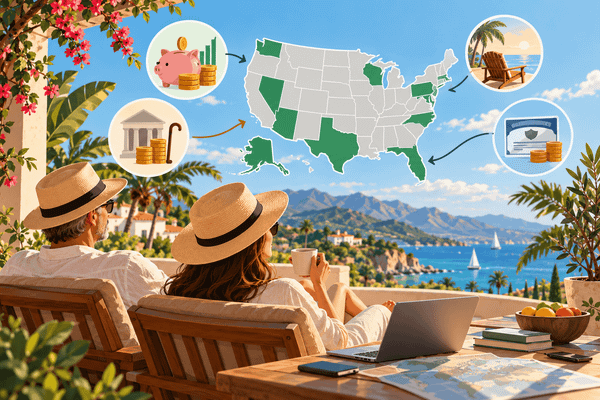
For many expats, digital nomads, and RVers, states like Florida, Texas, and South Dakota are popular for having no state income tax and for supporting remote lifestyles. However, choosing a domicile is not just about taxes. You also need to consider banking compatibility, address requirements, insurance, and how easy the state is to maintain remotely.
The most important part is consistency. Your address, records, licenses, and financial ties should all align with your chosen state to reduce the risk of residency disputes or compliance issues later.
Quick answer: What makes a good domicile state?
Domicile and residency are related, but they are not identical.
You can have multiple residences, meaning places where you temporarily live or stay, but you can only have one domicile at a time. Your domicile is your permanent legal home state and the state you intend to maintain long-term legal ties with. For tax, banking, licensing, and compliance purposes, domicile is usually what matters most.
For most expats, RVers, and digital nomads, a good domicile state has:
- No state income tax
- Strong banking compatibility
- Straightforward residency requirements
- Good insurance availability
- Vehicle-registration systems that work remotely
That’s why Florida, Texas, and historically South Dakota became the dominant domicile states.
However, taxes are only part of the equation. The best domicile state is the one that works across your entire setup, including your address, banking, vehicle registration, and long-term residency plans.
What is domicile?
Domicile is your permanent legal home state. You can have multiple residences, but you can only have one domicile at a time. It’s the state you intend to return to and maintain legal ties with, even if you spend little or no time there physically.
States determine domicile by looking at your overall connection to the state. This can include your address, driver’s license, voter registration, banking relationships, vehicle registration, insurance records, and even how much time you spend there during the year. No single factor usually determines domicile on its own. Instead, states look at the full picture to decide where your true legal home is.
This is why consistency matters. If your records point to different states, it can create confusion and, in some cases, lead to residency or tax disputes.
Why your state of domicile matters
Domicile affects much more than taxes.
Your state determines how you’re treated for:
- State income tax purposes
- Banking and financial compliance
- Driver’s license eligibility
- Vehicle registration
- Insurance availability and pricing
- Estate planning and probate laws
For example, some states aggressively pursue former residents for taxes if they believe ties were never properly broken. Others are far more straightforward.
Your domicile can also affect practical matters, such as whether your bank accepts your address and whether your insurance coverage remains valid while traveling.
Who needs to think carefully about domicile
Domicile planning is especially important for:
- Digital nomads
- Americans living abroad
- Full-time RVers
- Retirees overseas
- Remote business owners
These groups often move frequently or maintain flexible lifestyles, which means traditional residency assumptions no longer apply.
Without a structured domicile setup, it’s easy to end up with inconsistent records across banks, government agencies, and tax systems.
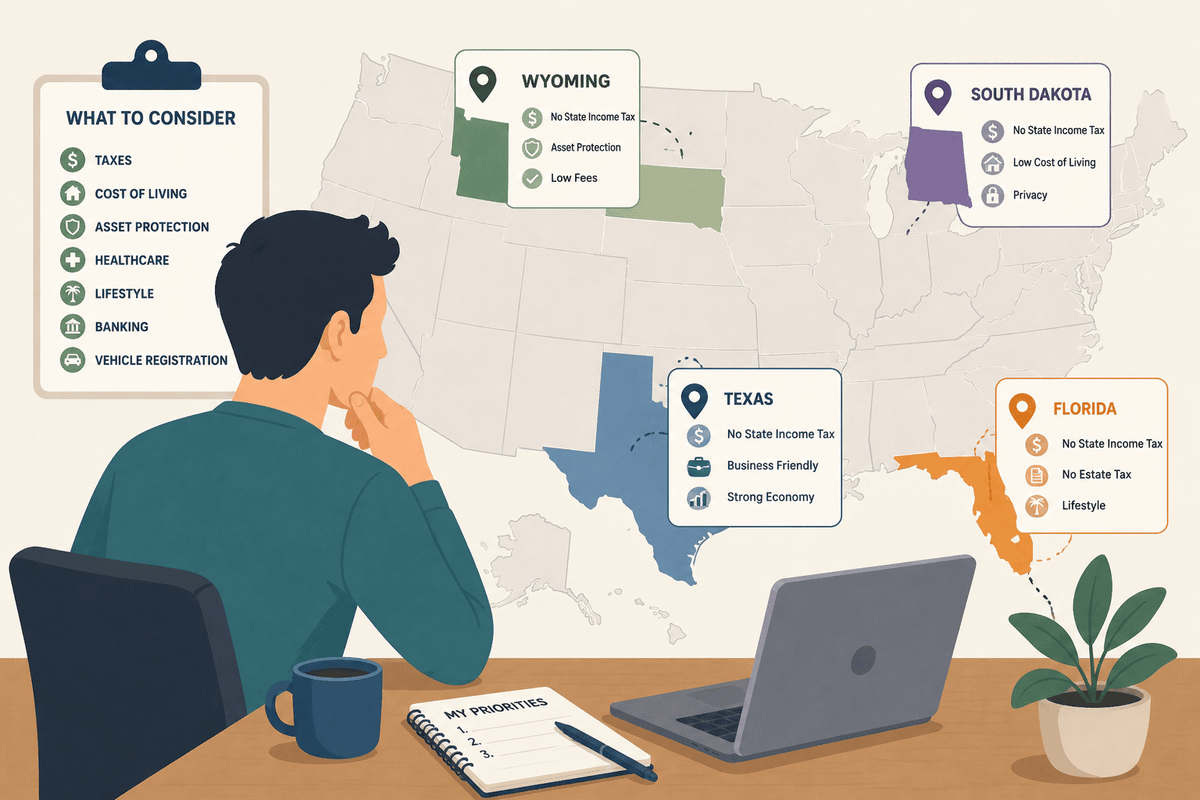
5 best states for domicile
Florida
Florida is usually the strongest overall option for expats, digital nomads, retirees, and internationally mobile couples who prioritize banking compatibility and long-term infrastructure.
It tends to work especially well for people living abroad because banks, insurance providers, and government systems are generally more compatible with Florida residency than in many other domicile states.
Florida is also one of the best options for people who want residential-address solutions, mail forwarding, healthcare access, and estate-planning advantages in one place.
Texas
Texas is another common choice, especially among RVers.
Like Florida, Texas has no state income tax. It also has a strong vehicle registration infrastructure and a large network of RV-friendly services.
However, insurance costs can vary depending on your setup and the county of registration.
Texas works especially well for people who regularly travel within the U.S.
South Dakota
South Dakota became extremely popular because of its historically simple residency requirements, but many new applicants should reconsider it carefully after the 2023–2024 voting and CMRA-address restrictions.
People who established South Dakota domicile years ago may still maintain functional setups there, but new applicants often face more friction than they would have previously.
The state can still work in some situations, but it’s no longer the universally easy option it once was. Beginning in 2023-2024, South Dakota implemented tighter voting and residency-related restrictions tied to CMRA and mailbox addresses, making some domicile setups more complicated than they were previously.
Nevada
Nevada attracts may appeal to some entrepreneurs because of its business-friendly environment, while Wyoming is popular for LLC privacy and business structuring.
However, in practice, it’s often less convenient for nomads than Florida or Texas. Costs can be higher, and there’s less established infrastructure specifically designed for full-time travelers and expats.
Nevada can work well for some entrepreneurs, but it’s not always the simplest option operationally.
Wyoming
Wyoming is often discussed because of its LLC and privacy advantages.
The state is business and tax-friendly, but it has less support infrastructure for nomads than Florida or Texas.
For people focused primarily on business structuring, Wyoming may make sense. For full-time travelers managing personal residency, it’s often less practical.
Summary
For most expats, retirees abroad, and digital nomads, Florida is currently the strongest all-around domicile option because it combines no state income tax with strong banking compatibility, residential-address infrastructure, insurance access, and long-term administrative stability.
Texas remains an excellent option for RV-focused travelers, while South Dakota now requires more caution than it did several years ago.
The best domicile setup is the one that keeps your taxes, banking, licensing, insurance, and residency records aligned consistently across every system you rely on.
Factors to consider when choosing your domicile
There are a few factors to consider when choosing a proper domicile such as state income tax, ease of establishing residency, and banking.
State income tax
For many people, taxes are the starting point.
States like California and New York can create ongoing tax exposure even after you move abroad if you don’t properly sever residency ties. Choosing a no-income-tax state can reduce long-term complexity.
However, taxes shouldn’t be the only factor. Saving money on taxes doesn’t help much if your banking or licensing setup becomes difficult to maintain.
Ease of establishing residency
Some states make domicile establishment relatively straightforward. Others require more extensive documentation or physical presence.
You should evaluate:
- Driver’s license requirements
- Address requirements
- Vehicle registration rules
- Time-in-state expectations
The easier these systems are to maintain remotely, the smoother your setup will usually be.
Banking and financial compatibility
This is one of the most overlooked parts of domicile planning.
Some addresses, especially CMRA mailbox addresses, can create banking issues because financial institutions often require a residential address for identity verification.
This is why many expats and nomads choose residential address setups rather than relying solely on mailbox services.
A domicile state that works well with banking and compliance systems often saves significant headaches later.
Insurance considerations
Insurance varies significantly by state.
Your domicile can affect:
- Health insurance options
- Vehicle insurance rates
- RV insurance availability
- Insurance eligibility overall
For retirees, healthcare access may become one of the most important factors in selecting a domicile state.
Vehicle registration
Vehicle registration is another practical consideration, especially for RVers and long-term travelers.
Some states make remote renewals easier than others. Some require inspections, while others are more flexible.
Registration costs also vary significantly by vehicle and state.
Leaving a high-tax state correctly
One of the biggest mistakes people make is assuming that moving abroad automatically ends their state tax residency. In reality, states like California, New York, Massachusetts, Connecticut, Oregon, and Virginia may still consider you a resident if you continue maintaining strong ties there.
Those ties can include keeping a home, remaining registered to vote, continuing to use old addresses, or maintaining primary banking relationships connected to the state. Even if you spend most of your time overseas, these details can still influence how your residency is treated for tax purposes.
Because of this, many expats establish domicile in a no-income-tax state like Florida before moving abroad. Properly changing domicile and updating records consistently can help reduce the risk of future residency disputes.
Related:
- Leave the California residency guide
- Leave the New York residency guide
How to actually change your domicile
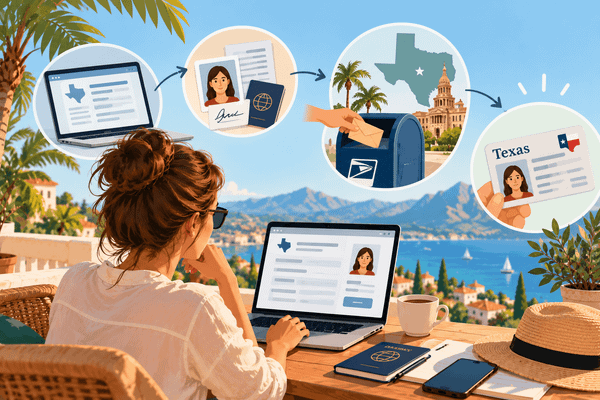
Changing domicile is not a single action: it’s a process of shifting your legal and financial ties from one state to another. This usually involves setting up a qualifying address, updating your driver’s license and voter registration, moving banking and insurance records, and making sure your tax and government documents consistently reflect the new state.
What matters most is consistency across systems. The more your records point to the same state, the stronger your domicile position becomes if your residency is ever questioned later.
Comment
by u/CheerfullySarcastic from discussion
in mumbai
How SavvyNomad can help
Domicile is more than just choosing a state.
Your address, banking, taxes, licensing, and documentation must all align. Most problems happen when these systems don’t match.
SavvyNomad helps Americans living abroad and remote workers establish compliant domicile setups with residential address solutions, mail forwarding, and support for maintaining consistent records across systems.
Conclusion
Your state of domicile affects nearly every part of your U.S. administrative and financial life.
The right domicile can simplify taxes, banking, insurance, and long-term compliance. The wrong setup can create ongoing friction, especially for people living abroad or traveling full-time.
Florida, Texas, and South Dakota remain the most common choices, but the best state depends on your specific goals and lifestyle.
The key is not simply picking a low-tax state: it’s building a setup that works consistently across every system you rely on.
FAQs
What is the best state for domicile?
For many expats and nomads, Florida is one of the strongest overall options because of tax advantages, banking compatibility, and infrastructure.
Can I change domicile while living abroad?
Yes, but the process must be handled carefully and consistently.
Do I need to physically live in the state?
Requirements vary by state. Some require limited physical presence, while others are stricter.
Can I use a virtual address for domicile?
It depends on the type of address. Residential virtual addresses generally work better than CMRA mailbox addresses for official purposes.
Does domicile affect taxes?
Yes. Your domicile determines your state tax obligations and can significantly affect long-term tax exposure.