Texas Residency: Benefits and Requirements


Texas has become one of the most popular domicile states for people who don't stay in one place. Digital nomads, long-term travelers, RVers, and remote workers all end up here for the same reasons: no state income tax, no estate or inheritance tax, and no separate state tax on capital gains.
There's also no minimum stay. You can establish and maintain Texas domicile while spending most of the year abroad or on the road — what matters is your ties to the state and your intent to keep Texas as your permanent home, not a day count. That surprises people, and it's where most competing guides go wrong.
This guide covers what domicile actually means and why it matters, what you gain by establishing it in Texas, the exact steps to do it, and how Texas compares to Florida and South Dakota — the two states people usually weigh against it.
| Category | Texas |
|---|---|
| State Income / Capital Gains / Estate Tax | 0% |
| Driver's License Requirements | Must apply in person |
| Driver's License Renewal | Every 8 years |
| Access to International Airports | Extensive options |
| Geographical Considerations | Better for travel to Mexico, Central America, and both U.S. coasts |
| Health Insurance Options | Broad range of ACA-compliant options |
| Car Registration | No safety inspection; emissions testing in some counties |
| Minimum Stay | No explicit minimum stay |
| Sales Tax | 6.25% – 8.25% |
| Payroll Taxes | No restrictions |
| Address Requirements | Residential address (must be livable) |
| W-2 Friendly | Yes |
Ready to find out why having a home base in Texas could be your next great move?
What is Domicile, and why is it important?
Think of Texas as your trusty home base, even if you're off globetrotting or thriving in your work-from-anywhere job. It's not just about where you crash at night – it's about having a spot that the law recognizes as your own 'piece of' Texas turf.
Domicile is like your home field and, for our purposes here, Texas is the one we're rooting for. It's your permanent spot, the place you're tied to no matter where you jet off to.
Domicile state vs. Legal residence
If ‘domicile state' is your official home field, 'legal residence'. This difference is important because it determines where, if at all, you must pay state taxes.
Before diving into the specifics, it helps to understand Texas domicile requirements as distinct from simple residency—domicile is your permanent legal home, not just where you're currently staying.
Tax implications
Taxes? In Texas, you can forget about state income tax. This is a big deal, especially if you're a high-earner.
Eligibility for state services
Even if you’re not always in Texas, being a legal resident means you’re still a member of the community, participating in both the responsibilities and benefits of being a Texas resident.
Legal rights and obligations
Your domicile state determines many of the rules you must follow when it comes to legal matters. For example, upon death, Texas would be the state whose courts oversee your estate and probate process, which can affect how your assets are administered and how federal estate-tax rules interact with your plan. Texas itself does not impose a separate state estate or inheritance tax.
Understanding what makes Texas your home base is key to taking full advantage of what this unique state offers. Understanding this helps you make smart decisions and enjoy the full Texas experience.
How SavvyNomad helps
Texas is available on our Basic Domicile ($60/mo billed annually) and SavvyNomad ($90/mo billed annually) plans. A few things to know upfront: Texas does not currently include Domicile Premium or the registered agent service—both remain Florida-only.
How this actually works
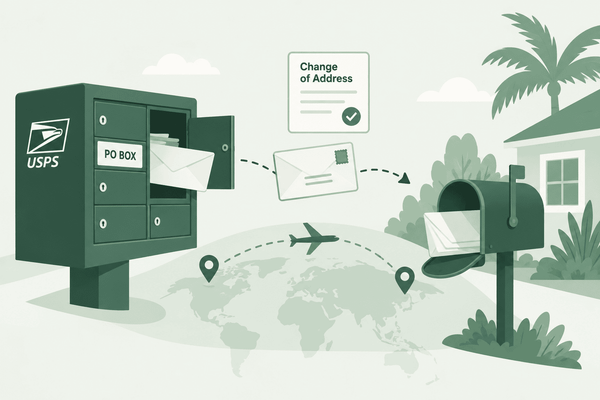
"One thing to know upfront: while your residential address — the one that establishes your Texas domicile — is in Texas, your mailing address for day-to-day mail and packages is centralized in Florida. Mail sent directly to your Texas address can still be received, but expect up to a 10-business-day delay before it's uploaded to your account. This split is standard across how we handle Texas domicile and doesn't affect your legal Texas residency status."
And while your residential address is in Texas, your mailing address stays in Florida for every customer, since both states route through the same Florida mail facility. If you need Premium-level documentation or a registered agent, Florida may be the better starting point—see our Florida residency guide to compare.
Here are the key benefits of making Texas your domicile:
Tax perks
How does keeping your hard-earned money sound? In Texas, there's no chunk of your income heading off to the state, which means more dough for your adventures or your piggy bank.
By moving from a high-tax state to Texas, you may eliminate state and, in some cases, local income taxes on your personal earnings, which can materially increase your after-tax income if you were previously subject to double-digit state and local rates.
• No corporate income tax
Running your empire from a hammock or a high-rise? Texas doesn’t levy a traditional corporate income tax, though many businesses are subject to a separate franchise (margin) tax on their Texas revenues. Depending on your structure and revenue, this can still mean a lighter overall state tax burden than in many high-tax states.
• No estate or inheritance tax
Got a treasure chest of assets? Pass it on to your descendants without the state dipping in. In Texas, what's yours stays in the family, no estate or inheritance taxes in sight.
• Sales-tax-focused system
Texas leans more on sales tax and less on income tax. The state sales-tax rate is 6.25%, and local jurisdictions can add up to 2% more, so your total rate will typically fall somewhere around 8% depending on where you shop. That structure shifts more of the tax burden to consumption rather than wages and salaries.
• No additional state tax on capital gains
And for the money maestros, Texas plays it cool with your investments — it doesn’t add a separate state tax on capital gains, so you only worry about federal capital-gains rules rather than an extra state layer.
• Cost efficiency
From getting your paperwork to keeping your car legally on the road, Texas is all about keeping the costs down. That means more cash for living it up or tucking away for the future.

Texas residency requirements
Ready to hang your hat in Texas?
1. Legal prerequisites:
- Intent to establish domicile. Domicile isn't about days spent in the state — it's about showing that Texas is where you intend to keep your permanent home. The things that carry the most weight are a Texas driver's license, Texas voter registration, and a Texas residential address on your official records: tax returns, bank and brokerage accounts, insurance policies, employer files. These are what a former state looks at if it ever questions your move, and none of them require you to be in Texas.
If you do spend time in Texas, local ties can strengthen the picture further — a congregation, a gym or club membership, a doctor or dentist you see regularly, a cause you volunteer for. These are optional. They help, but the records above do the real work.
2. Timeframe:
- General Timeframe: Document age, not a waiting period: The 30-day figure refers to how old one of your two proof-of-residency documents needs to be, not a required physical presence period. If you're surrendering a valid, unexpired out-of-state license or ID (or applying for a CDL), this requirement is waived entirely, which covers most people moving to Texas.
3. Required documentation:
- Proof of Residency: DPS requires two documents showing your name and Texas residential address; one must be dated at least 30 days before your appointment. This is about document age, not how long you've physically been in the state — if you're a SavvyNomad customer, the Letter to the Texas Department of Public Safety we provide, plus a financial statement showing your Texas address, covers both. And if you're surrendering a valid, unexpired out-of-state license or ID (or applying for a CDL), the 30-day requirement is waived entirely.
- Additional Documentation: In some cases, you might need to show where you work, where you've studied, or where you pay taxes to prove Texas is your home state.
- For the full official requirements, see TxDPS: Texas Residency Requirement for Driver Licenses and ID Cards, current fees, online renewal, and CDL applications.
4. Special considerations for digital nomads and expats:
- Flexible Documentation: If your home office is wherever you open your laptop, Texas will work with you on what counts as proof of Texas residency.
- Online Processes: Renewing your vehicle registration or your driver's license? Texas has you covered with online services.
Steps to move your domicile to Texas
1. Obtain your Texas address
If you sign up with SavvyNomad, you won't need to buy property or sign a lease. We provide a Texas residential address that meets the state's requirement for a real, livable address, plus the documentation showing your name at that address that DPS and other agencies will ask for.
At SavvyNomad, your mailing address will be in Florida, since all our mail routes through our Florida facility. That's where your mail and packages get scanned and uploaded to your account. Anything sent directly to your Texas residential address still reaches you, but it may take up to 10 business days to appear in your account.
2. Cut ties with your old state
This is the step people skip, and it's the one that causes problems later. A former state can still claim you as a resident if you've left the door open.
Close or transfer what anchors you there: end your lease or sell the property, close local memberships and club accounts, surrender your old driver's license when you get your Texas one, cancel your old voter registration, and move any professional licenses or business registrations where you can.
Keep records of each one. If your old state ever asks, dated proof of when you cut each tie is what settles it.
3. Update your financial accounts
Change your address with your bank, brokerage, credit cards, insurers, retirement accounts, and your employer or payroll provider.
Two reasons this matters: your tax forms need to show Texas, and account statements showing a Texas address build the paper trail that supports your domicile claim.
4. Obtain your Texas driver's license
Apply in person at a DPS driver license office. If your Texas address is in Aransas County:
- Aransas Pass Driver License Office, 919 S. Commercial, Aransas Pass, TX 78336, (361) 758-8680
- Corpus Christi Mega Center, 3506 Twin River Blvd, Corpus Christi, TX 78410
All driver's license and ID services are by appointment only, with a limited number of same-day slots released first-come, first-served. Book at txdpsscheduler.com.
Bring:
- Proof of identity and lawful presence — U.S. passport, certified birth certificate, or permanent resident card
- Proof of your Social Security number — your card or another document showing the number
- Your Letter to the Texas Department of Public Safety — we provide this. It confirms your Texas residential address to DPS and serves as your first proof-of-residency document
- A financial statement showing your Texas address — a bank or brokerage statement works. This is your second proof-of-residency document
- Your current out-of-state license, which you'll surrender at the counter
- Proof of Texas registration and liability insurance for any vehicle you own, or a signed statement that you don't own one
DPS requires two documents showing your name and Texas residential address, and the letter plus your financial statement cover both. One of the two normally needs to be dated at least 30 days before your appointment — a document-age rule, not a residency-duration one — but that's waived entirely if you're surrendering a valid, unexpired out-of-state license or ID.
5. Register your vehicle (if you have one)
Handled at the county tax office, not DPS. In Aransas County that's the Tax Assessor-Collector at 319 N. Church, Rockport, TX 78382, (361) 729-6633.
Bring:
- Form 130-U, Application for Texas Title and/or Registration
- Your out-of-state title, or your current out-of-state registration plus lienholder details if a lender holds the title
- Proof of Texas liability insurance meeting state minimums. An out-of-state policy won't work
- Photo ID
- An emissions inspection report if your county requires one. Safety inspections ended for non-commercial vehicles on January 1, 2025, but emissions testing continues in a handful of counties, and if yours is one, the vehicle has to be physically in Texas
- Payment for title fee, registration fee, and new resident use tax
6. Register to vote
If you're eligible, register to vote in Texas. It's a strong supporting indicator of domicile, though it's weighed alongside everything else rather than deciding your tax status on its own.
Worth knowing if you're comparing to Florida: Texas pulls jurors from both voter rolls and DPS records. Getting a Texas license, not just registering to vote, is what puts you in the jury pool.
7. Complete your Declaration of Domicile
We handle this one. Once you're set up, we send you the completed form and a link to an online notary, so you can get it notarized from anywhere without finding a notary in person. Send the notarized form back, and we file it with the county Clerk's Office.
Aransas County, like many Texas counties, has no online lookup for recorded filings. Confirming one means calling the Clerk directly, which we take care of since we're the ones submitting it.
8. File IRS Form 8822
This notifies the IRS of your address change and keeps your federal and state records consistent. File it after your Texas address is active.
Maintaining Residency Status
Maintaining residency status in Texas is crucial to keep enjoying all the perks of being a Texas resident. Once you’ve established domicile in Texas, it’s important to keep up with a few key actions to stay compliant.
Actions to help you stay compliant
To keep your Texas residency status in good standing, here are some key best-practices:
- Avoid building residency somewhere else. Texas doesn't require you to be physically present, so the risk isn't spending too little time in Texas — it's spending too much time in another state. If you're traveling, working abroad, or moving between places, watch how long you stay anywhere in the U.S. that has an income tax. Many people use 183 days in a single state as their ceiling, since some states use that threshold as one factor in deciding whether to treat you as a resident. Days aren't the only thing those states look at, but they're the easiest thing for them to count, and the easiest thing for you to control.
- File Taxes: File your federal income tax returns as a Texas resident. This helps solidify your claim to Texas residency for tax purposes.
- Vote in Texas: Once you establish residency and if you’re eligible, you’ll register to vote in Texas and can participate in state and local elections, further integrating you into the community.
- Update Your Address: Keep your address updated with all relevant entities, like banks and employers, to reflect your Texas residency.
- Keep Records: Maintain records of your residency, including proof of domicile and employment. This can include utility bills, lease agreements, and employment contracts.
Comparison with Florida and South Dakota domiciles
| Florida | South Dakota | Texas | |
|---|---|---|---|
| State Income / Capital Gain / Estate Tax | 0% | ||
| Driver's License Requirements | Must apply in person | Must apply in person | Must apply in person |
| Driver's License Renewal | Every 8 years | Every 5 years | Every 8 years |
| Access to International Airports | Extensive options | Limited access | Extensive options |
| Geographical Considerations | Better for travel to East Coast, Europe, and Latin America | Better for travel to West Coast | Better for travel to Mexico, Central America, and both U.S. coasts |
| Health Insurance Options | Broad range of ACA-compliant options | Limited ACA-compliant options | Broad range of ACA-compliant options |
| Car Registration | VIN inspection in Florida or by your local law enforcement | Online | No safety inspection; emissions testing in some counties |
| Minimum Stay | No explicit minimum stay | 24 hours every 5 years |
No explicit minimum stay One proof document must be 30+ days old |
| Sales Tax | 6% | 4.50% | 6.25%–8.25% |
| Payroll Taxes | No problems | Cannot use PMB address for payroll taxes | No problems |
| Address Requirements |
Residential address Must be livable |
Residential address Must be livable |
Residential address Must be livable |
| W-2 Friendly | Yes | No | Yes |
Not sure Texas is the right fit? See our full breakdown on how to select your state of domicile before deciding.
Texas vehicle registration requires no VIN inspection and no emissions testing in most counties, and safety inspection was eliminated for non-commercial vehicles as of January 1, 2025 (HB 3297). Commercial vehicles and a handful of counties with emissions programs are still subject to inspection — check your county. Registration fees vary by vehicle; see the TxDMV fee chart for current amounts rather than relying on a flat number here.
When it comes to choosing a domicile for tax benefits, Texas, Florida, and South Dakota are often in the spotlight. Here's a side-by-side comparison to give you a clearer picture:
Tax benefits:
State income tax
All three states roll out the red carpet for your wallet by not dipping into your income. Whether you're a freelancer or running a corporation, you're off the hook for state income tax in Texas, Florida, and South Dakota.
Sales tax
- Texas starts with a 6.25% state sales tax. But depending on where you shop, local taxes might bump that number up a bit.
- Florida has a slightly lower state sales tax at 6%, but just like Texas, local areas could tack on extra.
- South Dakota boasts the lowest state sales tax of the trio at 4.5%, but again, local taxes could increase your checkout total.
Capital gain tax
If you're playing the long game with your investments, Texas, Florida, and South Dakota won't ask for more at tax time. Capital gains get the same no-state-tax treatment, with only federal taxes to consider.
Establishing residency:
General considerations
- Nomad-Friendly States: All three are a hit with roaming types like RVers and globe-trotting workers because they don't take a slice of your income in state income taxes.
- Common Steps: Whichever state you pick, you’ll be looking at similar steps: snagging a local address, getting that state ID or driver’s license, and setting up your mail so important documents reliably reach you.
Texas
- Get a Texas address, apply for a Texas ID, and let the state know you'll vote here.
- If you’ve got wheels, you’ll still need to register your vehicle in Texas, but as of January 1, 2025, most non-commercial vehicles no longer require an annual state safety inspection to complete registration. Some counties still require emissions testing, and commercial vehicles remain subject to inspections, so check the current rules for your vehicle type and county.
"Head to your nearest DPS office. If you're in the Rockport/Aransas County area, that's the Corpus Christi Mega Center (3506 Twin River Blvd, Corpus Christi, TX 78410). Appointments only."
Florida
- Florida's list looks a lot like Texas'—address, ID, voter registration.
- Registering your car here might be kinder to your bank account than in South Dakota, and you can skip the vehicle inspection. Instead, all you need is your VIN and a physical inspection by a local police officer in your current county. Considering that this could save you a road trip across the country, it's well worth it.
South Dakota
- South Dakota now requires that you first obtain a residential address in the state and then spend one night in a hotel or campground in the state before applying for a South Dakota driver's license. You'll need a receipt from the hotel or campground that displays your name, and the names of everyone in your family seeking to establish South Dakota residency, and your South Dakota address.
- The fees for vehicle registration are fair, and you won't have to worry about inspections or emissions tests, which means no road trips and no VIN inspections.
FAQs
What do I need to bring to get a Texas driver's license?
For SavvyNomad customers, the stack is four documents:
- Your passport — establishes identity and lawful presence.
- Proof of your Social Security number.
- The "Letter to the Texas Department of Public Safety" — we provide this. It confirms your Texas residential address to DPS.
- A financial statement showing your Texas address — a bank or brokerage statement works. This is your second proof-of-residency document.
DPS requires two printed documents showing your name and Texas residential address, which items 3 and 4 cover. One of the two normally needs to be dated at least 30 days before your appointment — a document-age requirement, not a residency-duration one. You don't need to have lived in Texas for 30 days; you need a document with your Texas address on it that's 30+ days old. And if you're surrendering a valid, unexpired out-of-state license or ID, or applying for a CDL, that 30-day requirement is waived entirely, which covers most people. TxDPS doesn't publish a deadline by which new residents must get a Texas license.
If you're assembling documents outside of our service, DPS accepts a wider list, including:
- Current deed, mortgage, or residential rental/lease agreement
- Valid Texas voter registration card
- Texas motor vehicle registration or title
- Texas license to carry
- Utility or residential service bill dated within 180 days
- Selective Service card
- Homeowner's or renter's insurance policy
- High school, college, or university report card
- Preprinted tax forms, financial statements, or government agency documents
- Military or Veterans Administration documents showing an address
- Medical bills, hunting or fishing licenses, pay stubs
How does establishing a domicile in Texas impact my federal and state tax obligations?
Establishing a domicile in Texas can reduce your state tax obligations (think no state income taxes) , but your federal tax obligations are unchanged.
Are there any benefits in Texas for remote workers or digital nomads in terms of services or infrastructure?
Texas is big on tech and has a welcoming vibe for remote workers. Think co-working spaces and tech meetups galore, plus a business-friendly atmosphere.
What are the implications for my voting rights if I choose Texas as my domicile?
Planting your flag in Texas means you get to vote in Texas. Remember to update your registration and note that you won't be voting back in your old stomping grounds.
How does Texas handle driver's licenses for those not physically present year-round?
Even part-timers can get a Texas driver's license. Just make sure you've got a legit residential Texas address and keep up with any special rules for renewals.
Can I maintain my Texas domicile if I'm abroad for an extended period?
In many cases, yes. From a domicile perspective you can often keep Texas as your home base while you’re abroad, as long as you maintain clear ties to Texas (such as a residential address, records, and voter registration) and don’t establish a new domicile elsewhere. Other states and tax authorities will still look at your overall facts, so it’s wise to get individualized advice if you’ll be gone for a long period.
How often must I be in Texas to maintain my domicile status?
There’s no fixed day-count rule in Texas law for maintaining domicile. Instead, what matters is your overall pattern of life: where you keep your home, where you intend to return, and where your key ties are (ID, registrations, records, family, etc.). The bigger point is showing that Texas — not another state — is your true long-term home.
How do I become a Texas resident?
You'll need to show intent to make Texas your home (driver's license, voter registration, a Texas address) plus proof-of-residency documents — one dated at least 30 days old, which is a document-age requirement, not a wait-in-state requirement. This is waived if you're surrendering a valid out-of-state license. See 'Texas residency requirements' above for the full checklist.
Are there any Texas-specific health insurance considerations for remote workers or digital nomads?
Health insurance can be tricky, so look for plans tailored to folks who might be working from a hammock one day and a coffee shop the next.