South Dakota driver’s license requirements for non-residents & digital nomads
South Dakota is a popular choice for digital nomads and expats looking to maintain a US driver’s license while living abroad or traveling. This guide explains the process, what documents you may need, and what to consider before applying.

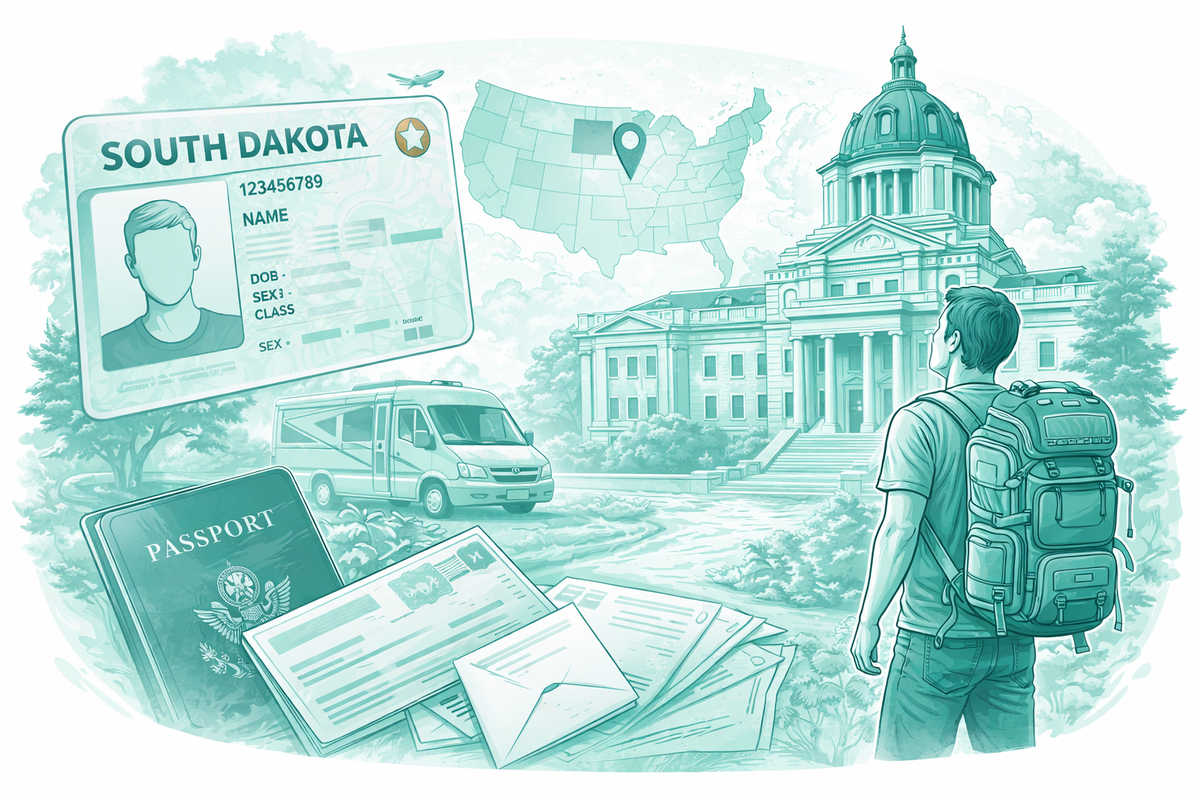
South Dakota is often discussed among digital nomads, RV travelers, and Americans living abroad who want to maintain a legal presence in the United States. A key reason is the state’s driver’s license process, which has historically been considered relatively simple and accessible compared to other states.
Many people explore this option to understand whether a South Dakota driver’s license for non-residents is possible and what documentation may be required. The state has also been widely associated with domicile strategies for individuals who spend significant time traveling or living overseas.
South Dakota continues to attract attention for factors such as its lack of state income tax and a long-standing reputation for accommodating mobile lifestyles. However, recent changes to residency rules and address requirements mean the process may not be as straightforward in all situations, especially for digital nomads and remote workers.
In this article, we explain how the South Dakota driver’s license process works today, what documents may be required, and what considerations non-residents and expats should keep in mind. Because requirements are set by state authorities and may change over time, it is important to verify current rules with the appropriate licensing agency before applying.
Recently, there’s been a bit of chatter about South Dakota driver’s licenses for non-residents in expat and remote-working communities. The main selling points are that South Dakota has relatively lax residency requirements and no state income tax. To get a South Dakota driver’s license as a non-resident, you’ll generally need to prove that you are either a resident or domiciled in South Dakota.
This typically means proving you have a South Dakota street address, then completing the application for a new driver’s license at a local DMV office. It’s always best to do your due diligence on this stuff and confirm that none of the requirements have changed with the Department of Public Safety.
Recent changes to South Dakota residency rules for digital nomads
South Dakota has often been seen as a practical choice for digital nomads and Americans living overseas who want a driver’s license and a US address. The process is simple, with no state income tax, and it used to be quick to establish residency. Many people only had to spend a night in the state and sign a residency affidavit to show they intended to make South Dakota their home.
This easy process made South Dakota popular with travelers. Some people would visit for a short time, get their driver’s license, and then move on. But it’s important to remember that establishing residency is more than just following steps. States usually look at your intent and supporting documents, including how well you keep ties to the state.
Recently, South Dakota made changes that could affect how residency is defined for some uses. For example, new voting rules now require people to spend more time physically in the state. Also, laws now make it clear that some addresses, mail forwarding services, do not count for all official purposes.
These changes are important for digital nomads to note: rules can change, and not all address documents are accepted the same way. Sometimes, you might need a real residential address for legal, work, or tax reasons. So, if you’re considering using South Dakota for your license or residency, check the latest state rules and make sure your documents meet your needs.
In summary, South Dakota is still talked about among nomads, but the process isn’t as simple as it used to be. It helps to know both the benefits and the limits before choosing it as your main state of residency.
Why digital nomads choose South Dakota
South Dakota is a popular destination for many RVer’s and remote workers. So many people travel throughout the country that they choose to call South Dakota their legal home. Before choosing a state, many people compare options like Florida, Texas, and South Dakota. This breakdown of the best and worst domicile states for nomads can help you evaluate the differences.
Why move to South Dakota? In terms of state taxes, South Dakota ranks slightly higher than Illinois for those considering such factors. A state with a higher tax burden generally imposes higher taxes on a broader base of residents and may even levy fees on certain goods and services. It also tends to have higher spending and a larger number of state government employees per resident.
States with these characteristics tend to have less money available for individual residents to keep, which is the basic premise of low taxes. South Dakota’s low taxes, along with lower cost of living and few local property taxes, make it an attractive option for those seeking a lower tax burden.
We mentioned earlier that certain states are more friendly to citizens who spend less time there, and South Dakota is another prime example. Not only is the overall residency process here very simple and easy to follow, but the state's reputation for the easiest process is also a major factor in our decision. South Dakota isn't typically a state that's fraught with onerous paperwork and long periods spent on the actual grounds of the state to be considered a full-fledged resident.
Having a primary residence is an important consideration, but other factors come into play when considering domicile and state laws vary, so it’s not always straightforward or in one’s favor. These issues are fact-dependent and tax-related.
Can non-residents get a South Dakota driver’s license?
Many of you are interested in whether non-residents can get an SD driver’s license.
Typically, a state will require proof that you have established a residence or domicile in that state, which means providing evidence of a connection to the state such as an address and some form of ID.
Applicants typically need to:
- establish residency or domicile in South Dakota
- provide documentation supporting a South Dakota address
- appear in person at a driver licensing office
Applying for a Concealed Carry Permit is a process that is controlled and directed by the South Dakota Department of Public Safety.
Information on this page is subject to change as our resources are updated by various government agencies. Please check with your DMV for the most current information.
What are South Dakota residency requirements for a driver’s license?
If you want to obtain a driver’s license, it is generally a requirement that you establish residency in South Dakota.
The process generally includes several key elements.
1. Physical presence in South Dakota
You will most likely be required to show proof of residency in South Dakota. Even if you live and travel a lot, most programs will require an in-person enrollment visit.
2. Documentation confirming a South Dakota address
Applicants usually must provide documentation confirming a residential or mailing address associated with South Dakota. This requirement is often discussed in the context of South Dakota address requirements.
3. Identity verification
Like in most states, you’ll need to show documents that prove who you are. These help confirm your identity and that you’re eligible for a driver’s license.
Since the rules can change, it’s a good idea to check with the Department of Public Safety for the latest information before you travel to apply.
What documents are commonly required?
When you apply for a driver’s license, you’ll usually need to bring a few different types of documents. The exact list can change, but most licensing offices ask for documents in these categories:
- Proof of identity. You’ll need to show documents that prove your identity, like a passport, birth certificate, or another government-issued ID.
- Social Security documentation. In many cases, you’ll also need to provide your Social Security number or documents that show you’re eligible for one.
- Proof of South Dakota address. You’ll usually need to show documents that link you to a South Dakota address. This helps the state confirm your residency.
- Completed application forms. You’ll also need to fill out the right application forms from the licensing office.
The licensing office decides which documents are accepted, so check their requirements before you apply.
Address requirements for South Dakota driver’s licenses
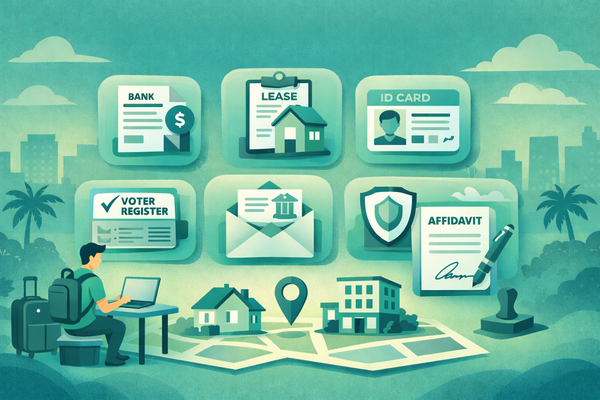
For digital nomads, one of the most talked-about parts of getting a South Dakota driver’s license is the address requirement: you must provide documentation showing a South Dakota residential address or another address that meets state guidelines.
Examples of documentation that may sometimes be used include:
- campground receipts or travel documentation
- mail forwarding address documentation
- lease agreements or property records
These documents can help show your connection to South Dakota, but the licensing office will decide if they’re acceptable. You also need to confirm the South Dakota domicile requirements directly with the Department of Public Safety before applying.
Steps to obtain a South Dakota driver’s license
The exact process can vary, but getting a South Dakota driver’s license usually follows these main steps.
1. Gather required documents
Before you go to the licensing office, gather documents that prove your identity, Social Security status, and address.
2. Travel to South Dakota
You’ll usually need to be in South Dakota when you apply for your license.
3. Visit a licensing office
You’ll generally submit your application in person at a Department of Public Safety driver licensing office.
4. Submit documentation
At your appointment, you’ll hand in your documents and fill out the required forms.
5. Complete tests if required
Depending on your situation, you might need to take a vision test or a knowledge test.
The steps may differ if you already have a license from another state.
South Dakota driver’s license validity and renewals
South Dakota driver’s licenses are generally valid for five years, expiring on the applicant's birthday. Residents can renew online, by mail, or in person up to 180 days before expiration if they are US citizens or permanent residents. In-person renewal is required if the last renewal was not in person.
License Renewal Options
- Online renewal: Eligible if your license is valid or expired less than 30 days, within 180 days of expiration, and you are a U.S. citizen/permanent resident.
- In-person: Necessary if you need a new photo, are changing from a standard to a REAL ID, or your last renewal was not in person.
- Kiosk: Available for renewal up to 90 days before expiration.
- Military/out-of-state: Active duty military and dependents, or those outside SD, can renew online or by mail, often with updated address documentation.
South Dakota domicile vs residency
When considering South Dakota residency, you may come across the terms residency and domicile.
Residency generally refers to living in a place or having a connection to a place.
Domicile is the place you consider your permanent legal home:
- intent to maintain a permanent home in the state
- documentation linking the person to the state
- official records reflecting the state address
Just having a mailing address doesn’t always mean you have a legal home there. Officials may consider several factors when determining your legal residence.
Common mistakes digital nomads make
People looking into South Dakota driver’s licenses for digital nomads sometimes get confused about how residency and domicile rules work.
There are a few common misunderstandings that can cause confusion.
Assuming an address alone establishes domicile. Having an address in a state does not necessarily establish legal domicile. Authorities may evaluate additional factors when determining residency.
Failing to update official records. When you set up residency in a new state, you’ll often need to update your ID, financial records, and other official paperwork.
Misunderstanding documentation requirements. Different offices may ask for different documents. Thinking that one document will work everywhere can sometimes cause delays or problems.
Since everyone’s situation is different, it’s a good idea to check the document requirements carefully before you apply.
Conclusion
Obtaining a South Dakota driver’s license for non-residents or digital nomads usually involves demonstrating residency, providing documentation confirming a South Dakota address, and appearing in person at a licensing office. South Dakota is not the only option, some travelers also explore Florida driver’s license options for digital nomads
While the process has attracted attention among travelers and remote workers, eligibility ultimately depends on meeting the requirements established by the South Dakota Department of Public Safety.
Because residency rules and documentation requirements may change over time, applicants should always confirm current policies with the licensing authority before applying.
Understanding the general process, required documentation, and potential considerations can help individuals make informed decisions when exploring how to establish residency in South Dakota.
FAQs
Can a non-resident get a South Dakota driver’s license?
Applicants are required to show that they are a resident or domicile of South Dakota and submit proof of a qualifying address. Residency determination is performed by the South Dakota Department of Public Safety.
Do digital nomads use South Dakota for residency?
Some digital nomads and travelers consider South Dakota when deciding where to establish a domicile, due to its residency laws and tax policy. Not always applicable.
What documents are required for a South Dakota driver’s license?
Applicants usually need identification documents, Social Security documentation, proof of address, and completed application forms. Exact requirements are determined by the licensing authority.
Do you need to live in South Dakota to get a driver’s license?
Applicants generally must show residency or domicile and come to a licensing office. Check with the South Dakota Department of Public Safety for the exact requirements.
How long is a South Dakota driver’s license valid?
South Dakota driver’s licenses are generally valid for five years, expiring on the applicant's birthday.
![Charles Schwab international account for nomads and travelers [review]](/content/images/size/w600/2026/03/charles-schwab-international-account.png)