What happens if you don't file US taxes while living abroad
Many Americans abroad don’t realise they may still need to file US taxes. This guide explains the risks of not filing, potential penalties, and the options available to get back on track.

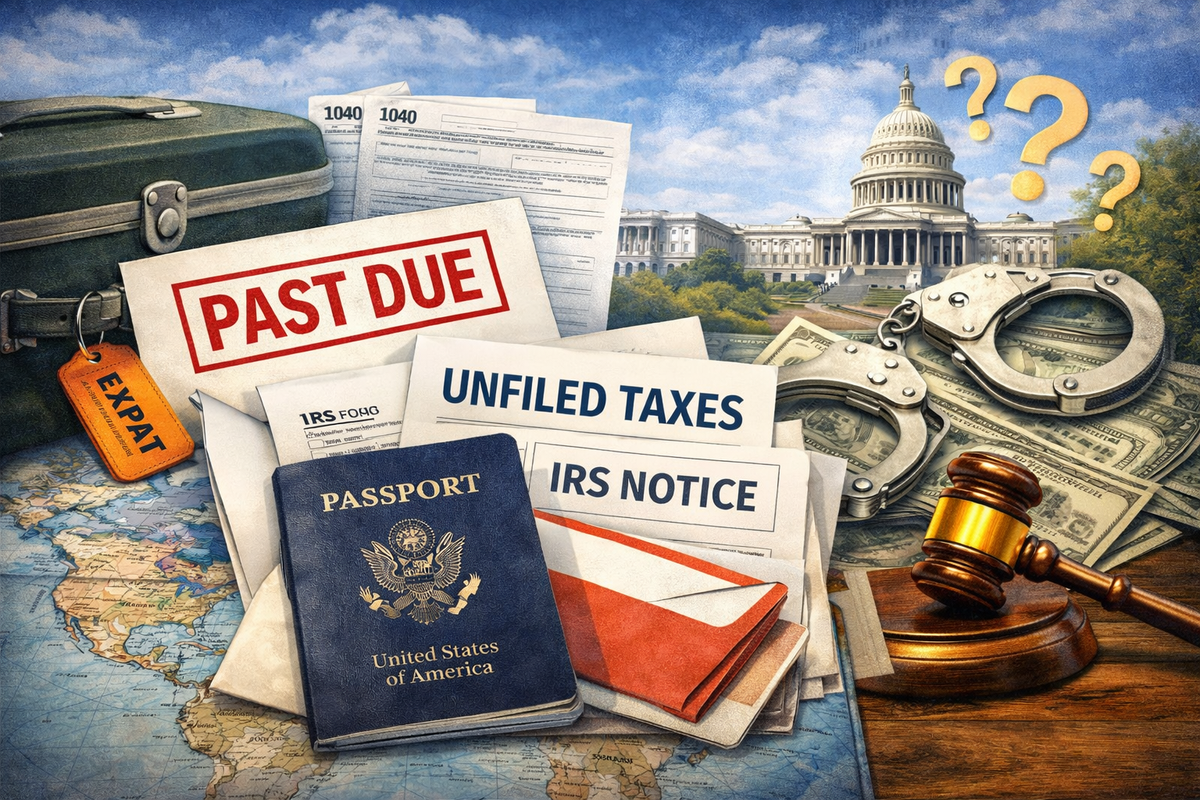
One of the most common misconceptions among Americans living abroad is that the U.S. tax authorities only tax income earned in the United States. Americans abroad often assume that when they move permanently abroad for work or retirement, they are no longer required to pay US taxes on the global income they earn.
This myth is perpetuated by many, including digital nomads, expats, and even second citizens who continue to earn income in foreign countries.
The US taxing citizens based on citizenship rather than residency means that even if you relocate to another country, you may be required to file taxes and disclose all of your income to the IRS.
So what happens if you don’t file US taxes abroad?
This guide will cover the potential consequences (including penalties and risk of audit) as well as the steps taken by the tax authorities to enforce these requirements. Please note that actual consequences may vary based on the taxpayer’s specific situation.
If you don’t file US taxes while living abroad, you may still face penalties, interest, and reporting issues, even if you don’t owe tax. US citizens are generally required to report worldwide income and foreign accounts. The impact depends on your situation, but there may be options to catch up and become compliant.
Do US citizens need to file taxes while living abroad?
For most expats, the answer remains the same: yes, you are still required to file your taxes.
This tax provision generally requires that worldwide income be reported to the Internal Revenue Service (IRS), regardless of where it was earned. It may also require disclosure of foreign bank accounts and other foreign assets if the total value exceeds a certain threshold.
The requirements for filing tax returns differ depending on income levels, filing status, and the types of accounts expats have. Some expats, while eligible for exclusions and/or credits and thus not ultimately paying taxes, will still have to file their tax returns.
Because of this, many expat Americans continue to file their annual tax returns, even though they have no tax liability.
What happens if you don’t file US taxes abroad?
If you don’t file US taxes while living abroad, the consequences can vary depending on your situation.
Some individuals may not owe any tax, especially if their income falls below certain thresholds. However, failing to file can still create compliance issues, particularly if reporting requirements apply.
In other cases, there may be financial consequences such as penalties or interest on unpaid taxes. Over time, these amounts may increase if filings remain outstanding.
It’s also important to understand that tax compliance can affect other areas of your financial life, including banking and documentation requirements.
Potential IRS penalties for expats
The IRS has several penalties it can apply in specific situations. The penalties are largely driven by whether there was non-filing, non-payment, or a combination of both.
1. Failure to file penalty: This penalty may be imposed if a required tax return is not filed on time. The amount of this penalty will depend on the length of time the return has not been filed and on whether any tax is due.
2. Failure to pay penalty: If you still owe taxes and haven’t paid them, you may be charged another penalty, which is also calculated as a percentage of the tax owed.
3. Interest charges: They could also face penalties, and taxes could incur interest over time. How stimulus checks are applied will depend on a range of factors, including current income, prior tax returns, and any outstanding tax obligations.
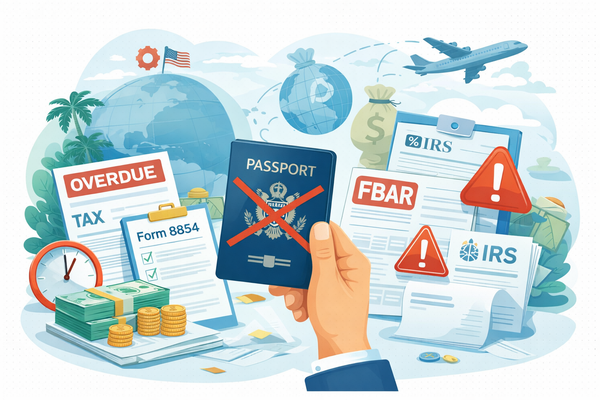
FBAR and foreign account reporting penalties
In addition to standard tax returns, some expats may need to report foreign financial accounts.
This is commonly done through the FBAR (FinCEN Form 114), which applies when the total value of foreign accounts exceeds certain thresholds.
Failing to file an FBAR when required can result in penalties. These penalties may vary depending on whether the failure is considered non-willful or willful.
Because the rules can be complex, many expats are unaware of FBAR requirements until they begin reviewing their tax situation.
FATCA and additional reporting requirements
Another reporting requirement that may apply is FATCA (Form 8938).
This form is used to report foreign financial assets, such as bank and investment accounts, as well as other foreign assets.
Each FATCA threshold is based on filing status and residency. Although most expats won’t have to file Form 8938, those whose assets exceed the designated levels will have to attach Form 8938 to their annual tax return.
This may subject the taxpayer to additional penalties.
Can the IRS enforce tax compliance abroad?
One of the more frequent questions we receive from our clients living abroad is whether the IRS can enforce compliance.
Enforcement of this rule may vary depending on several factors. Another factor that could influence the enforcement of this rule is international information sharing.
A large number of banks worldwide report accounts to the relevant tax authorities in their home country under FATCA (The Foreign Account Tax Compliance Act), which requires them to provide the name, address, taxpayer identification number and account balance to the US Treasury for any US persons they hold accounts for.
This includes some types of financial information that the IRS may collect, whether or not the individual submits an annual tax return.
Even the administration of these measures can differ from one country to another or from one individual to another. In some cases, collections are done little; in other cases, a cooperation agreement may be in place.
This explains why the degree of enforcement can vary greatly from situation to situation.
What if you didn’t know you had to file?
Although some may choose to intentionally skip tax season, it is unlikely that many expats are leaving taxes unmishandled on purpose. More often than not, it is a case of not knowing that even if one is living abroad, they are still required to pay taxes to the United States.
This is an often misunderstood phenomenon, especially among those who have moved to the US later in life, dual citizens, or those living outside the US for an extended period of time.
The IRS considers the facts and circumstances in determining whether to exercise its discretion on reasonable cause grounds rather than on tax evasion grounds.
This guide gives some very basic guidance on your obligations. It is designed to help you understand that there is probably more to consider than the few paragraphs below. It is, however, a starting point in a complex and potentially changing area of law.
Options for getting back into compliance
If you have not filed US taxes while living abroad, there are ways you can come into compliance.
Among the options are recovering past returns the IRS may have lost or obtaining IRS relief for individuals who said they did not know they owed taxes.
The appropriate approach depends on factors such as:
- how many years of returns are missing
- whether any tax is owed
- whether reporting requirements were met
Because the process can involve multiple steps, many individuals choose to review their situation carefully before taking action.
Risks of ignoring US tax obligations
Choosing not to file US taxes indefinitely can create long-term risks.
Penalties and interest can accrue over time, which can continue to increase the amount you owe. Unaddressed taxes can also cause problems when you have to make financial transactions, such as with banks.
Banks and account maintenance. For example, some banks may require a document confirming that tax obligations have been met when opening and/or maintaining a bank account. Non-compliance with the tax authority’s requirements may pose a problem in such cases.
If CHC is affected in the USA, it may also affect our future business there.
As a result, some people find themselves wishing to file their taxes sooner rather than later.
Considerations for digital nomads and expats
Digital nomads and expats often have more complex tax situations than individuals living in a single country.
They may earn income in multiple jurisdictions, hold accounts in different countries, and move frequently between locations. This can make it more difficult to keep track of reporting obligations.
Maintaining consistent records, understanding filing deadlines, and keeping financial documentation organised can help simplify the process.
Planning ahead may also help reduce potential issues, especially when dealing with multiple tax systems.
US expat taxation can involve multiple reporting requirements and changing regulations.
Because of this, many individuals choose to consult professionals who specialise in expat tax matters. This may include tax advisors, accountants, or legal professionals with experience in international tax compliance.
Professional guidance can help clarify requirements, review filing history, and identify appropriate next steps based on individual circumstances.
Tax program for accidental Americans
Some individuals who have US citizenship may not realise it or may not have been aware of their US tax obligations. These individuals are sometimes referred to as “accidental Americans.” This can include people born in the United States who left at a young age, or individuals who acquired US citizenship through parents but have lived most of their lives abroad.
Because of this, some people only discover their US filing requirements when opening bank accounts or being asked to complete tax-related forms. In these situations, the lack of filing is often due to lack of awareness rather than intentional non-compliance.
In response, the IRS has introduced certain procedures designed to help eligible individuals come into compliance. These programs may allow taxpayers to catch up on past filings under specific conditions, depending on their circumstances. However, eligibility criteria and requirements can vary, and not all individuals qualify.
For those who believe they may fall into this category, reviewing their situation carefully can be an important step. Understanding available options may help reduce uncertainty and provide a clearer path toward resolving past filing obligations.
Conclusion
Unresolved issues arising from failure to file U.S. taxes while living abroad can range from the inconvenience and time required to resolve the matter to monetary fines or penalties. The gravity of the consequences will depend on the specific situation and the particular circumstances of each case, such as income levels, specific reporting and compliance obligations and each individual’s tax compliance history.
Understanding the consequences of not filing US taxes abroad is a crucial step for all Americans residing abroad. Due to the complexity of tax laws, knowing which tax forms to submit and the regulations for US citizens abroad can be overwhelming. The only way to fully understand the tax obligations for individuals living abroad is to take the time to assess your circumstances.
If you have missed some tax filings, do not worry. There are ways to deal with this problem. As always, prevention is better than cure, and forward planning is also important for your overall financial well-being, both now and for the future when you are resident abroad.
FAQs
Do I have to file US taxes if I live abroad?
Many U.S. citizens, even those residing abroad, are still required to file tax returns. Check your specific situation with local tax authorities to verify eligibility and requirements based on income and other factors.
What happens if I don’t file US taxes?
Late payment penalties, interest and administrative charges may apply. Your individual circumstances may be different.
Are there penalties for expats who don’t file taxes?
Penalties may apply for failure to file or failure to pay taxes, as well as for failing to report certain information.
What is FBAR and who needs to file it?
FBAR stands for Financial Bernard And Report. Essentially, it is a report on foreign bank accounts whose balances reach specified limits. Most expats are not required to file an FBAR.
Can I catch up on missed US tax filings?
There are several alternatives or arrangements that can be made in particular situations.