How to leave Wisconsin residency?


Considering leaving Wisconsin residency? Whether it's for lower taxes, career relocation, or retirement, it's important to understand the process. Wisconsin has its own tax regulations that can significantly impact residents, especially those with income from outside the state. Wisconsin's state income tax rates can be as high as 7.65%, and as a resident, you're taxed on your worldwide income.
Many people are leaving Wisconsin due to factors such as the state's shrinking job opportunities, particularly for young professionals and recent graduates seeking higher wages in larger metro areas like Chicago or Minneapolis.
Retirees are also drawn to warmer, tax-friendly states such as Florida and Arizona. By taking the right steps, you can minimize tax liabilities and fully embrace the financial advantages of your new state of residency.
This guide is particularly useful for digital nomads, expats, retirees, and anyone else seeking to sever ties with Wisconsin for tax or lifestyle reasons.
Steps to leaving Wisconsin residency
Step 1: Establish a new domicile
When leaving Wisconsin residency, the first and most important step is to establish a new domicile in your chosen state. This involves not only physically moving but also legally demonstrating your intent to make the new state your permanent home.
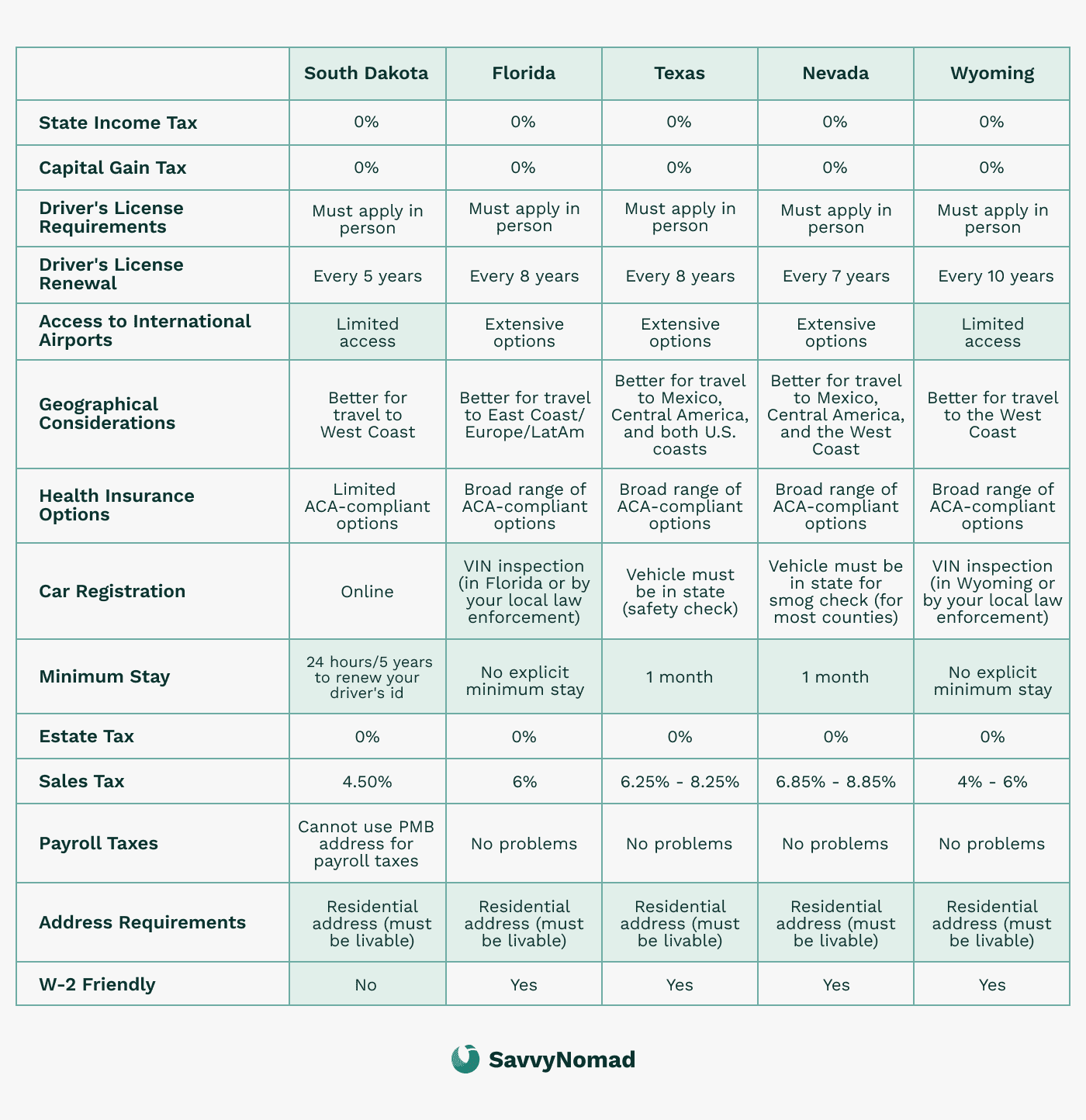
1) Establish new residency
- Secure a residential address: Rent or purchase property in your new state.
- File a Declaration of Domicile: In some states, such as Florida, filing this document further solidifies your intent to establish residency.
The address is provided solely for documentary and correspondence purposes related to client-direct banking or brokerage verification; it is not for business registration, public listing, or general mail forwarding. Banks and state agencies make their own decisions, no specific outcome is guaranteed, and prior-state rules may still apply.
Residency guides:
2) Relocate your belongings
Move your personal items to your new state. Relocating possessions such as furniture and vehicles shows your serious intent to establish a permanent residence.
3) Spend time in your new state
Spending considerable time in your new state will further prove that it is your primary residence. Avoid spending too much time in Wisconsin, as this could lead to questions about your residency status.
4) Transfer IDs and vehicle registrations
Transfer your driver’s license and vehicle registration to the new state. These are clear signs of your intent to leave Wisconsin and settle in a new state.
5) Register to vote
If you are eligible, you may register to vote in your new state. Voter registration is one supporting indicator of domicile—not determinative on its own. For eligibility and procedures, follow guidance from election officials in your new state.
6) Update financial accounts
Notify banks, credit card companies, and other financial institutions of your new address. This ensures that all your financial activities reflect your new state residency.
7) Notify your employer
Update your employer with your new address, and ensure that payroll and tax withholdings are aligned with your new state. This helps avoid confusion with tax filings.

Step 2: Sever ties with Wisconsin
Once you’ve established a new domicile, the next step in leaving Wisconsin residency is to sever all major ties with the state. This helps demonstrate to tax authorities that you no longer intend to maintain residency in Wisconsin.
1) Close Wisconsin financial ties
- Close local bank accounts: Shutting down Wisconsin-based financial accounts and transferring funds to banks in your new state is an important move.
- Update personal records: Make sure to update your mailing address with the IRS, Social Security, insurance providers, and any other official entities.
2) Sell or lease property
- Sell or lease your Wisconsin property: If you own property in Wisconsin, selling or leasing it is an important step in demonstrating that you no longer intend to reside in the state. If leasing, make sure it’s a long-term agreement to avoid any appearances of continued residency.
- Move personal belongings: Relocate your personal belongings to your new state to further support your permanent move.
3) Cancel local subscriptions/services
Make sure that subscriptions and services, such as gym memberships, utilities, and local memberships, are canceled or transferred to your new state.
4) Transfer healthcare and insurance
Set up healthcare providers in your new state, and make sure your health insurance is updated to reflect your new residence. This is another important step in showing that your day-to-day life is based elsewhere.

Step 3: Time spent outside Wisconsin
A critical factor in successfully leaving Wisconsin residency is both your domicile and the amount of time you spend in the state. Wisconsin treats you as a legal resident if you maintain your domicile in Wisconsin, whether or not you are physically present there; time spent in Wisconsin is one of the key facts used to evaluate your intent.
Many advisors use “more than half the year” (around 183 days) as a practical risk benchmark, so tracking how much time you spend in the state is essential.
183-day rule
- Manage your days in Wisconsin: Once you’ve genuinely shifted your domicile to another state, keeping your time in Wisconsin under roughly half the year can help support your case that Wisconsin is no longer your primary home. Spending most of the year in Wisconsin—especially if you also keep a home and other ties there—will make it harder to argue that your domicile has changed.
- Maintain travel records: Keep detailed records of your time spent outside Wisconsin. Save flight tickets, hotel receipts, and other documents that prove your physical presence in another state. This documentation will be crucial if the Wisconsin Department of Revenue ever audits your residency status.
By following these guidelines, you can strengthen your case that you spend enough time outside Wisconsin to maintain non-resident status after you change your domicile and reduce your exposure to Wisconsin’s resident-level income tax. Keeping accurate records is key to supporting your claims of residency elsewhere.
Step 4: Wisconsin-sourced income
Even after successfully leaving Wisconsin residency, you may still have tax responsibilities for any income sourced from the state. Understanding how Wisconsin-sourced income is taxed will help you remain compliant with the state’s tax laws.
1) Ongoing tax responsibilities
If you continue to earn income from Wisconsin (e.g., rental income or business profits), you will need to file non-resident tax returns. This helps Wisconsin tax only the income earned within the state rather than your worldwide income, while your other income is handled under the rules of your new state or country.
2) Rental or business income
Any rental properties or businesses you maintain in Wisconsin will still be subject to the state’s tax laws. Make sure you understand the ongoing tax implications and keep clear records to stay compliant with Wisconsin tax rules. Consulting with a tax advisor is highly recommended to navigate these complexities.