How to leave Nebraska residency?


Leaving Nebraska residency can be an exciting change, whether you're moving for a new job, lower taxes, or just a change of scenery. Nebraska has specific rules about residency that can affect your tax obligations, eligibility for state benefits, and more.
This guide will walk you through the steps to officially leave Nebraska, establish your new domicile, and manage any financial ties you still have with the state.
Step 1: Establish a new domicile
After deciding to leave Nebraska, the next step is to establish your new permanent home, or domicile, in another state. Simply moving isn't sufficient; you need to take specific actions to make your new state your official residence.
Here’s how to do that:
1) Establish new residency
- Secure a residential address: Find a place to live in your new state, whether it’s through renting or buying a home. Many states, like Florida, offer tax benefits such as the homestead exemption, which can help lower property taxes for eligible homeowners. Setting up a permanent residence in your new state is one important factor that supports the idea that you’ve left Nebraska, but it’s never the only thing the state looks at.
A Florida address by itself does not establish Florida tax residency or guarantee any tax, banking, or immigration outcome; banks and state agencies make their own decisions, and prior-state rules may still apply.
- File a Declaration of Domicile: Some states, like Florida, allow you to file a Declaration of Domicile, a legal document that confirms your intent to make the new state your permanent home.
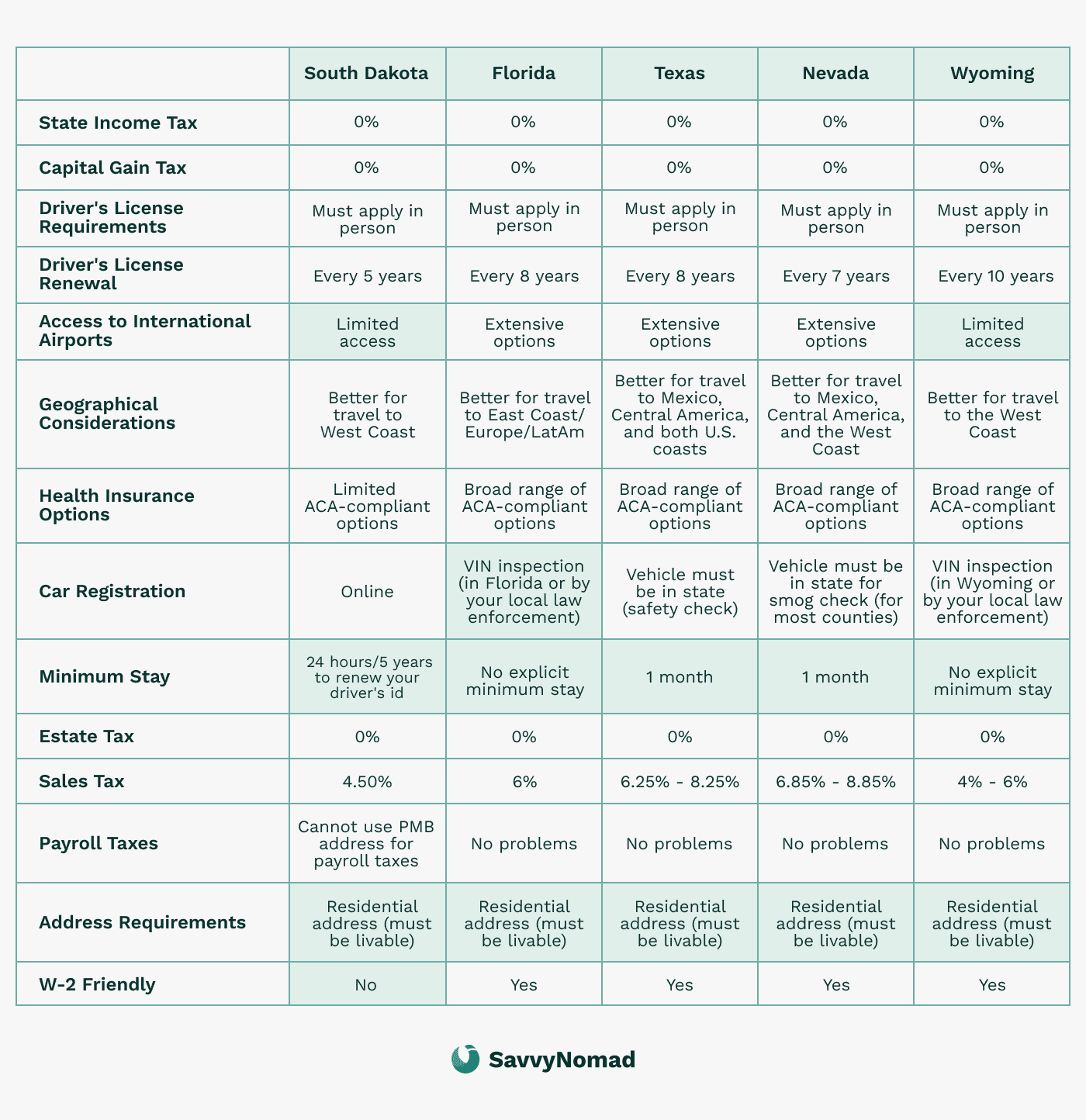
Residency guides:
2) Relocate your belongings
Moving your personal belongings, such as furniture, vehicles, and household items, indicates that your move is permanent and demonstrates your intention to live in the new state long-term.
3) Spend time in your new state
Spending a significant amount of time in your new state indicates that you have truly relocated. Ensure that you are spending more time there than in Nebraska to avoid any confusion about your primary residence.
4) Transfer IDs and vehicle registrations
Update your driver's license and vehicle registration to reflect your new address in your new state, as this indicates your intent to live there permanently.
5) Register to vote (if eligible)
If you’re eligible, you may register to vote in your new state and update any prior registration. Voter registration is just one supporting indicator of domicile and not determinative on its own. For eligibility and procedures, always consult the official election authorities in that state.
6) Update financial accounts
Notify your bank, credit card companies, and other financial institutions of your new address. Keeping all your financial documents up to date with your new residency helps confirm your move.
7) Notify your employer
Let your employer know about your new address so they can update your payroll and state tax withholding to your new state. Keeping your records up to date typically helps align withholding with your new situation, but actual withholding depends on your employer’s payroll setup and the rules that apply to you.

Step 2: Sever ties with Nebraska
After establishing your new home, it’s important to substantially reduce your significant connections with Nebraska. Doing this consistently can help reduce the chance that the state continues to treat you as a resident for tax purposes, but no single step is determinative and outcomes always depend on your specific facts and Nebraska law.
Here are the steps you should take to sever these ties:
1) Close Nebraska financial ties
- Close local bank accounts: If you have any bank accounts, investment accounts, or financial assets linked to Nebraska, you should consider closing them or transferring your funds to banks in your new state. This action will demonstrate that your financial affairs are now centered in your new state.
- Update personal records: Notify the IRS, Social Security, insurance companies, and other relevant agencies of your new address to ensure all personal records reflect your new residence.
2) Sell or lease property
If you own a home or any other property in Nebraska, selling it is one of the strongest ways to show that you no longer consider Nebraska your primary residence. If you’re not ready to sell, consider leasing the property out for an extended period, which can also help demonstrate your intent to leave.
3) Cancel local subscriptions/services
Make sure to cancel any subscriptions or memberships linked to Nebraska, such as gym memberships, utilities, or local services. Keeping these active could indicate that you still have connections to the state.
4) Transfer healthcare and insurance
Transferring your healthcare providers and insurance to your new state shows that your essential services are now tied to your new domicile.
Step 3: Time spent outside Nebraska
To avoid being taxed as a resident in Nebraska, it is important to carefully manage the amount of time spent in the state. Nebraska follows the 183-day rule, which is commonly used by many states to determine residency.
183-day rule
- What is the 183-day rule?: If you spend 183 days or more in Nebraska in a calendar year, you may be considered a resident for tax purposes, even if you’ve moved to another state. This means you could be liable for state income taxes.
- Stay under the 183-day limit: To avoid being taxed as a resident, you’ll want to make sure you spend fewer than 183 days in Nebraska each year. A day counts as any part of a 24-hour period spent in the state, so even short visits can add to your total.
Day count is only one factor. Nebraska can still treat you as a resident if Nebraska remains your domicile (your true permanent home) or you maintain a permanent place of abode there, even if you spend fewer than 183 days in the state.
Keep detailed travel records
- Why it’s important: If your residency status is ever questioned, having detailed records of your time spent in and out of Nebraska will be essential for proving that you’ve stayed under the 183-day limit.
- What to track: Save flight tickets, hotel receipts, and any other travel documents that show when you entered and left Nebraska. Having a detailed log of your movements will be helpful if Nebraska’s Department of Revenue ever audits your residency status.

Step 4: Nebraska-sourced income
Even after you've officially moved out of Nebraska, you may still have income connected to the state, such as rental income or business revenue. It's important to understand how to manage income sourced from Nebraska to ensure compliance with state tax laws.
Here's how to manage income sourced from Nebraska after you have relocated:
1) Ongoing tax responsibilities
- File non-resident tax returns: If you continue to earn income from sources within Nebraska, such as rental properties or businesses, you’ll generally need to file nonresident Nebraska returns. This is the mechanism Nebraska uses to tax only your Nebraska-sourced income, rather than income from your new home state or country, while you are treated as a nonresident.
- Tax on Nebraska-sourced income: Even though you are no longer a resident, Nebraska still has the right to tax income generated within the state. This could include wages earned in Nebraska, rental income, or profits from Nebraska-based businesses.
2) Rental or business income
If you own rental property or a business in Nebraska, any income generated from those sources will still be subject to Nebraska state taxes. It’s important to consult with a tax professional to ensure compliance with Nebraska tax laws, especially if you have complex income streams that tie back to the state.